
Background
Most people assume that a turf training area is simply a low-maintenance stand-in for a real lawn, something installed to save time on mowing while still giving a dog space to run. That assumption overlooks how much surface texture and consistency influence a dog’s ability to focus during structured sessions. Trainers who work with dogs on artificial turf report that the uniform footing removes some of the sensory distractions found in patchy or uneven grass, which can matter more than people expect when a dog is learning a new command. The surface itself becomes part of the training environment rather than a background detail.
Athletic facilities began using synthetic turf decades ago because it held up under repeated use and offered predictable footing regardless of weather. Dog training centers eventually adopted similar materials for the same reasons, noticing that consistent ground conditions helped handlers control variables during obedience and agility work. A dog stepping onto the same texture every session builds a kind of physical familiarity that can reduce hesitation, especially with younger or more anxious animals. Over time, that familiarity extends to how a dog responds to cues, since less mental energy goes toward adjusting to unfamiliar ground.
What the Research Shows
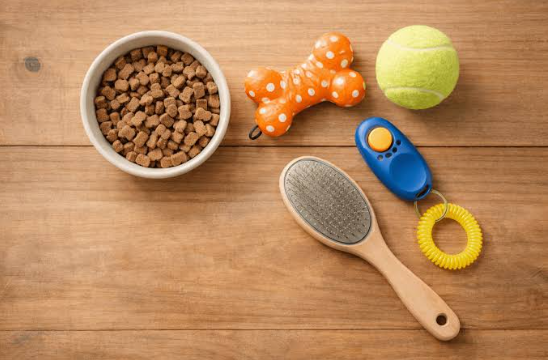
Behavioral researchers studying reinforcement learning in dogs have long pointed to the timing and consistency of rewards as the strongest predictor of how quickly a new behavior takes hold. Many trainers pair a stable training surface with a steady supply of dog treats to mark correct responses immediately, since delay reduces the strength of the association a dog forms between action and reward. Studies on operant conditioning in animals generally find that immediate, small, high-value rewards outperform delayed or infrequent ones, which is part of why handlers keep treats accessible during sessions rather than relying on verbal praise alone. When the environment stays predictable and the reward stays consistent, dogs tend to generalize the learned behavior faster across different settings.
Some of this pattern shows up in broader guidance from organizations that study canine behavior and training methods, including AKC dog care resources, which emphasizes that consistency across environment, timing, and reward type supports faster skill acquisition than sporadic training with mixed signals. Field observations from professional trainers align with this, noting that dogs trained on stable surfaces with clear reward structures show fewer signs of confusion when transitioning to new locations later. None of this suggests that surface alone determines training success, but it does appear to remove one variable that might otherwise slow progress. Removing unnecessary variables, researchers suggest, allows a dog’s attention to stay on the task rather than on adapting to shifting ground or inconsistent handling.
See also: Rethinking Holiday Lighting: A Smarter Way to Celebrate the Season
Practical Takeaways
For owners setting up a home training space, choosing a consistent surface and pairing it with a reliable reward system tends to produce steadier results than switching locations or reward types from session to session. Keeping treats small enough to deliver quickly, without interrupting the flow of a session, helps maintain the tight timing that reinforcement learning depends on. Short, frequent sessions on the same patch of turf, ten minutes at a time rather than an hour once a week, tend to build stronger habits with less frustration for both dog and handler. Consistency in footing and reward pattern together seem to matter more than the specific brand of turf or treat used.
Owners who want to expand beyond basic obedience work often find it useful to rotate in agility elements once a dog is comfortable on a stable surface, since stable footing supports more advanced movement work later. Tracking which rewards a dog responds to most reliably, and adjusting portion size for longer sessions, prevents overfeeding while keeping motivation high. Patience remains the deciding factor in most cases; even with ideal footing and well-timed rewards, dogs progress at different speeds depending on age, breed, and prior experience. A training space built around stability, in the ground and in the routine, gives a dog the best chance to learn at its own pace.

 By
By






 By
By